


The world is a mess. Wars, famine, drought, poverty, racism… I could go on and on, but it often appears to be getting worse. Perhaps because of instantaneous global communication, it seems worse because we are constantly bombarded with bad news.
It’s tempting to long for the “good old days.” Upon reflection and a study of history, however, we learn this is a myth. Certainly, we have made incredible progress in our world and in our individual lives through science, education, and human creativity. While longing for a return to a simpler past is understandable, it doesn’t help us address the deeper question, “What’s the problem?”
For ages, the world’s great religions and philosophers have asked the question, “Why?” and scientists have probed a different question, “How?”
The cause of the problem is unanimous. It’s us. We humans are the problem.

The Creation Stories in Genesis point the finger at the first humans, Adam and Eve, whose choice to eat of the Tree of the Knowlege of Good and Evil in the Garden, was their way of saying “We know best, not the Creator.”
Neil Young of Crosby, Stills, Nash, & Young sings,
“What will people do? After the garden is gone. What will people say?
After the garden, the news gets worse as Cain kills his brother Abel over who makes the best offering. One of my friends, Ken Olsen, put it this way, “The source of the problem is the word ‘better.’”
Creation began as the “original blessing.” “It was good!”
It soon became “original sin.”
Perhaps some readers don’t like the word “sin.” It seems old-fashioned and judgmental and has often led to religion focused primarily on judgment. While I reject this narrow judgmental faith, the word sin has for centuries described the heart of the problem: selfishness.

Years ago, during my studies at the University of Edinburgh, Scotland, I traveled to Ireland to play a rugby match. One Sunday morning, we visited the All Martyrs Church in Belfast, where the flamboyant pastor, Ian Paisley, was preaching. At that time, civil war was raging in Northern Ireland between Protestants and Catholics. Paisley was also a member of Parliament and a strong supporter of the Protestant cause. His sermon was based on what I thought to be an obscure Old Testament text,
“Your Sins Will Find You Out.” Numbers 32:23
As I tried to figure out the point of Paisley’s message, a line from a then-current song by the Beatles came to mind, “Instant Karma’s gonna get you…”
John Lennon and Yoko Ono wrote,
“What in the world you’re thinking of,
Laughing in the face of love?
What on earth you trying to do?
It’s up to you, yeah, you.”

Karma is a fundamental teaching in Hinduism and Buddhism. It teaches that our actions will ultimately have consequences.
Countless wise people try to explain “sin.” Martin Luther, the great Reformation scholar, used a Latin phrase “incurvatus in se” (turned in upon oneself) to describe how humans tend to turn inward toward themselves as a first impulse. Our fundamental human posture is looking at ourselves in the mirror.
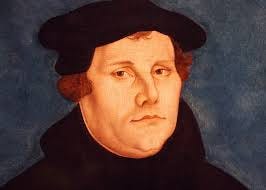
Once again, a musician, Michael Jackson, describes the human condition in his classic “The Man in the Mirror.”
“I’m starting with the man in the mirror
I’m asking him to change his ways
And no message could have been any clearer
If you wanna make the world a better place
Take a look at yourself and then make a change.”

In 1973, psychiatrist Karl Menninger published “Whatever Became of Sin?”, expressing concern that society was replacing the concept of sin with psychological terms like illness and disorder. He argued this shift reduced personal responsibility for actions, as wrongdoing might be excused by biological or environmental factors
While in seminary, I served a small black congregation in the projects. My members became my teachers and helped me understand that “sins” as individual acts didn’t account for a deeper corporate sin, racism. I began to reflect on how the systems of our society often lead to oppression. Banking practices like “red-lining” areas where people of color live make it more difficult to get loans. Urban schools are frequently under-resourced due to less property tax income. Inadequate legal assistance puts more people of color in jail. I saw this corporate sin at work in the lives of my church members.
St. Paul writes in his letter to the Ephesians, “For our struggle is not against enemies of flesh and blood, but against the rulers, against the authorities, against the cosmic powers over this present darkness, against the spiritual forces of evil in the heavenly places. Ephesians 6:12 NRSV.
My grandfather, Melvin Halverson, who grew up on a farm and became a pastor, had an earthy way of describing this reality, “In small amounts, manure is important, but in a big pile, it stinks!”
So, what’s the problem? It’s Us!
Next time: A humble attempt at solutions…
Paddle Pilgrim is a reader-supported publication. To receive new posts and support my work, consider becoming a free or paid subscriber.
For more information about my books, films, podcasts, and speaking paddle-pilgrim.com
Hi, Dave. Thanks for sharing such thoughtful words. I couldn't agree more that "we" are the problem. We've become so self-absorbed compared to our parents, our grandparents, and those further back. I'm not sure how to break this downward spiral.
Another term for this sin might be "conceit." It's been said, "Conceited people never hear anything but praise."
And Dylan, of course, had something to say about this in his song "Disease of Conceit."
Conceit is a disease
That the doctors got no cure
They've done a lot of research on it
But what it is, they're still not sure
There's a whole lot of people in trouble tonight
From the disease of conceit
Whole lot of people seeing double tonight
From the disease of conceit
Give ya delusions of grandeur
And an evil eye
Give you the idea that you're too good to die
And they bury you from your head to your feet
From the disease of conceit